Workshops & health and wellness group coaching

Understand more.
Choose what changes.

Practical neuroscience, creative exploration, and coaching conversations for people navigating real-world demands.

With Jeremy Morton, Surgical Neurophysiologist · Artist · Health & Wellness Coach.

Healthcare teams · Workplaces · Communities
Virtual and in person · Based in Atlanta

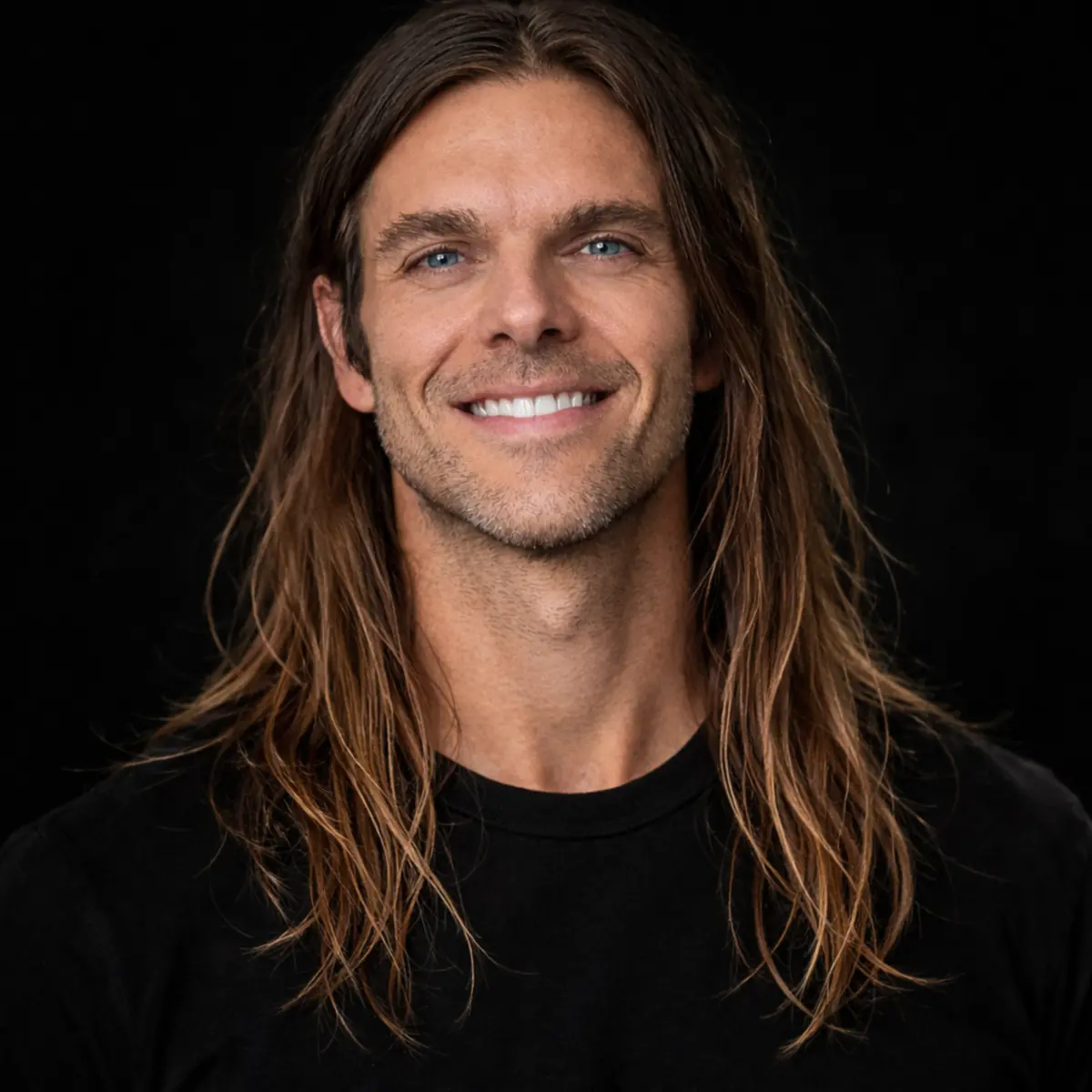
Jeremy Morton, workshop facilitator and health and wellness coach
Clinical precision. Creative curiosity. Your own next step.

From insight to everyday life

What you notice is a beginning.
What matters to you guides the rest.

How do you carry the day’s demands? What helps you recover? What would you like to do differently? These experiences bring accessible science into conversation with your own priorities, strengths, and circumstances.

Participants explore, reflect, and choose. In group coaching, each person sets their own direction, with support to turn an intention into a manageable experiment.

Two ways to work together

A shared experience.
A personal direction.

01 / Learn & explore

Interactive workshops

30, 60, or 90 minutes · Virtual or in person

A focused introduction combining accessible neuroscience, guided comparisons, and reflection. Designed around the audience and the time available.

  • Understand a relevant scientific idea and its limits.
  • Explore optional breath, movement, or creative practices.
  • Leave with one practical experiment to try.
Discuss a workshop

Format, group size, timing, and fee are agreed together. A workshop can introduce a topic before a coaching series deepens the work.

Starting points for your group

Relevant to the room.
Grounded in real life.

01

Attention Under Pressure

For clinical teams and demanding workplaces

Explore attention, effort, and the moments between tasks. Identify a personal cue and choose a practical pause that fits the setting.

02

Breath, Movement & Recovery

For staff development and community groups

Compare optional breathing and movement practices, notice your own response, and develop a realistic recovery experiment.

03

The Creative Brain at Work

For teams, educators, and events

Use close looking, simple mark-making, and conversation to explore interpretation, perspective, and alternative possibilities. No art experience needed.

The creative thread

A painting can invite a second look. A sound can become a focus of attention. A line drawn on paper can make effort visible. Jeremy brings an artist’s sensitivity to sight, sound, texture, and narrative into practical learning. Creative exercises are invitations to explore, without a prescribed response.

Explore Jeremy’s art

The evidence behind the approach

Research you can
look into.

Published research informs the components. Coaching helps participants consider what is useful in their own lives. Open each research note for the finding, its application, and its limits.

Group coachingSpace to reflect. Support to act.

Randomized trial

A randomized trial involving 1,017 women physician trainees across 26 institutions found improvements in professional distress and well-being following a four-month online group coaching program.

Mann et al. · JAMA Network Open · 2023 ↗

In practice

Participant-led goals, reflective questions, shared learning, and a next step each person chooses.

Keep in mind: This was a specific physician-coaching program. It does not establish outcomes for Jeremy’s program or for every population.

BreathExplore a different pace.

Randomized trial

A randomized study of five-minute daily practices over one month found that exhale-focused cyclic sighing improved positive affect and reduced respiratory rate more than mindfulness meditation.

Yilmaz Balban et al. · Cell Reports Medicine · 2023 ↗

In practice

Optional, comfortable breathing exploration, with room to observe individual responses.

Keep in mind: Brief workshop adaptations differ from the studied protocol. The study did not find significant changes in resting heart rate or heart-rate variability.

RecoveryMake room for a small pause.

Meta-analysis

A meta-analysis of 22 study samples found small improvements in vigor and fatigue from microbreaks. The overall performance effect was not statistically significant.

Albulescu et al. · PLOS ONE · 2022 ↗

In practice

Design a brief recovery opportunity around an actual transition in the working day.

Keep in mind: A short break is not a demonstrated solution to burnout, staffing pressures, or every performance demand.

Behavior changeGive an intention a place to land.

Experimental studies

Experimental studies of implementation intentions found that linking a specific situation to a specific action helped people initiate that action, including under cognitive load.

Brandstätter et al. · Journal of Personality and Social Psychology · 2001 ↗

In practice

Turn a chosen goal into an if-then plan: ‘When I finish a meeting, I will pause before opening the next task.’

Keep in mind: Planning can support follow-through; it cannot remove every personal or organizational barrier.

These studies examine particular practices and programs. Jeremy’s combined workshop and group coaching offering has not been clinically evaluated. Individual experiences vary. Coaching supports personal agency alongside, rather than in place of, improvements to working conditions.

Inside a session

Notice.
Experiment.
Choose.

An example 60-minute introductory workshop. Coaching series allow more time for participant goals, reflection, and follow-up.

  1. 00–10minutes

    Orient

    Connect the topic to the group’s context and invite a personal intention.

  2. 10–20minutes

    Understand

    Introduce a relevant research finding and its practical limits.

  3. 20–35minutes

    Explore

    Compare optional attention, breath, movement, or creative exercises.

  4. 35–50minutes

    Reflect

    Make space for coaching questions, personal relevance, and shared learning.

  5. 50–60minutes

    Choose

    Identify one realistic next step and when to try it.

Your facilitator

Jeremy Morton

Surgical Neurophysiologist · Artist
Health & Wellness Coach

More about Jeremy

In the operating room, Jeremy monitors neurological signals during surgery. In the studio, he explores perception through painting, relief, and sensory experience. In coaching, he brings that same careful attention to the person and the context.

He holds CNIM certification in neurophysiologic intraoperative monitoring and has completed Stanford health and wellness coaching education and Stanford YogaX training. His coaching centers on participant autonomy, reflective listening, and achievable steps.

His workshops bring these perspectives together through accessible science, breath and movement, creative observation, and conversation.

Explore his guided practices

Before we begin

Room for real people.

Who are these experiences for?

Healthcare professionals and clinical teams, workplace groups, educators, community organizations, and conference audiences. Content and examples are adapted to the group. No neuroscience, movement, or art experience is required.

What makes a session group coaching?

Participants identify their own goals and explore them through reflective questions, listening, and shared learning. Each person chooses their own actions. Workshops place more emphasis on teaching and guided exploration; coaching series provide more space to revisit goals and learn from experience.

Can we meet virtually?

Yes. Workshops and group coaching can be delivered virtually. The suggested four-session series meets for 60 minutes per session, with timing arranged around the group. In-person workshops are also available, with location and travel discussed during planning.

Do we need mats, special clothing, or physical fitness?

No mats or special clothing are required. Practices can be adapted for seated or standing participation. Every exercise is optional; observing or keeping your eyes open is welcome. Breathing stays comfortable, and participants can return to their natural breath at any time.

Do participants have to share personal information?

No. Sharing is optional. Group coaching begins with shared agreements about respect and privacy, although confidentiality between participants cannot be guaranteed. A participant can reflect privately and choose what to bring into the conversation.

Is this medical care or therapy?

No. These are educational and health and wellness coaching services, not diagnosis, medical treatment, psychotherapy, or rehabilitation. They do not replace care from a licensed clinician. Coaching also does not replace organizational responsibility for workload, staffing, or working conditions.

How are fees and outcomes discussed?

Jeremy provides a tailored fee after discussing the audience, format, group size, location, and scope. Learning objectives are agreed in advance. Optional participant feedback and a follow-up check-in can be included to explore usefulness and practice adoption; these are program feedback, not evidence of clinical effectiveness.
Bring the work to your group

Start with the people.
Shape the experience.

Tell Jeremy who it is for, what the group is navigating, and what you hope to explore. Together, choose a workshop, a coaching series, or a combination.

Plan with Jeremy

A conversation about fit.

Discuss your audience, practical needs, timing, and budget. Jeremy responds personally to inquiries.

Or email [email protected]